
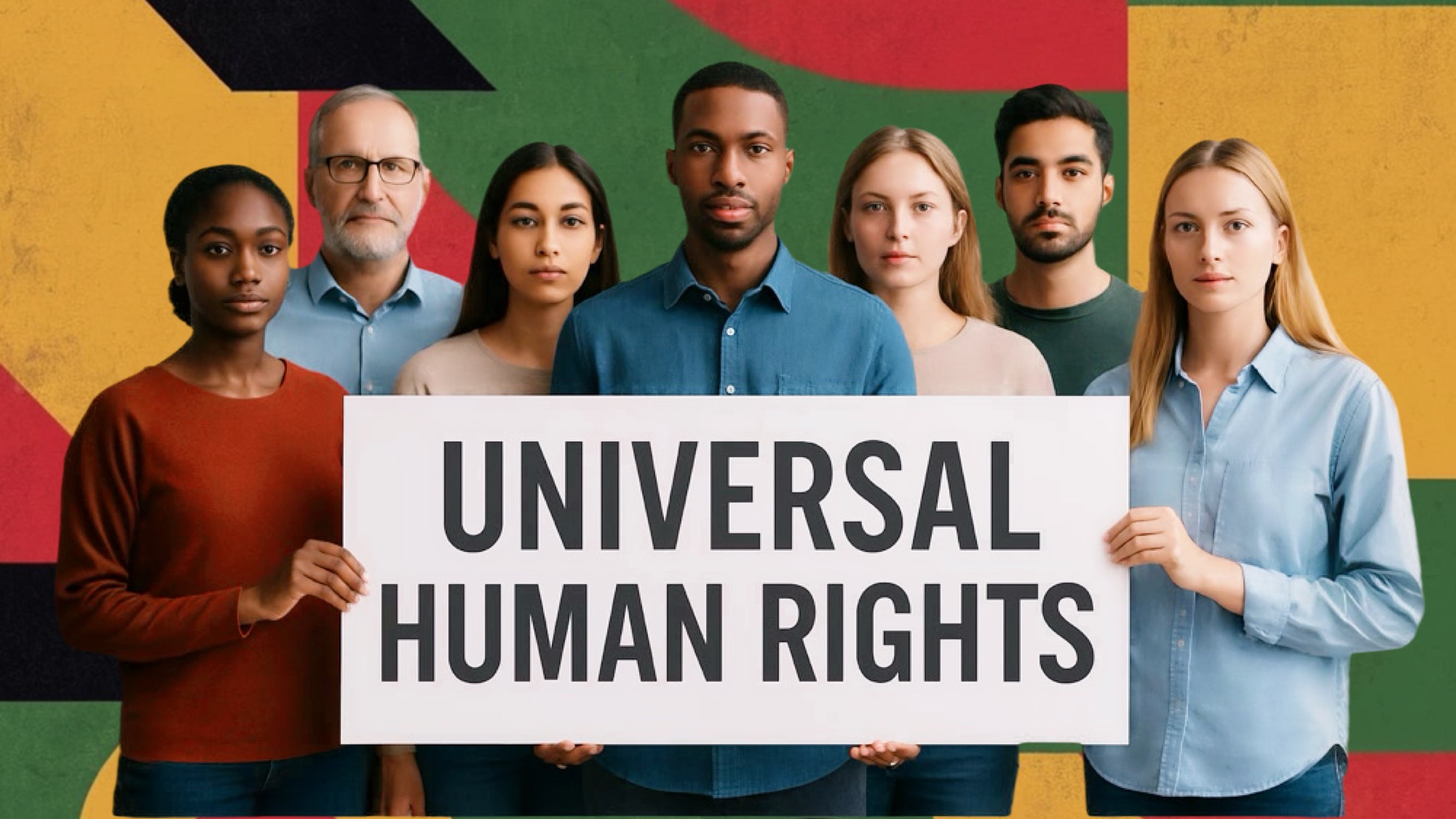
Been spending some time thinking about what our rights as humans on this planet actually are. It’s a feature of the curse of being a Government scholar…What are rights? Who gives us rights? How has the concept of being given rights shaped our thinking of what it means to be an individual living in the world?
The exploration of these topics lead me down some rabbit holes, to some historical figures, and to quite a few documents on the subject. One such document? The Universal Declaration of Human Rights.
The Universal Declaration of Human Rights (UDHR) was adopted by the United Nations General Assembly on December 10, 1948. It was a landmark document that set out, for the first time, fundamental human rights to be universally protected. Eleanor Roosevelt played a crucial role as the chair of the UN’s Human Rights Commission, helping to draft and promote the declaration.
The UDHR consists of 30 articles that cover a broad range of rights and freedoms, including the right to life, liberty, and security; freedom from torture and slavery; freedom of speech and religion; and the right to education and work. It has inspired numerous international treaties and national constitutions, serving as a foundational text for human rights worldwide. It remains a timeless reminder of the importance of dignity and equality for all people.
The UDHR starts with a powerful preamble that sets the stage for the entire document. It begins by recognizing the inherent dignity and the equal and inalienable rights of all members of the human family as the foundation of freedom, justice, and peace in the world.
Whereas recognition of the inherent dignity and of the equal and inalienable rights of all members of the human family is the foundation of freedom, justice and peace in the world,
Whereas disregard and contempt for human rights have resulted in barbarous acts which have outraged the conscience of mankind, and the advent of a world in which human beings shall enjoy freedom of speech and belief and freedom from fear and want has been proclaimed as the highest aspiration of the common people,
Whereas it is essential, if man is not to be compelled to have recourse, as a last resort, to rebellion against tyranny and oppression, that human rights should be protected by the rule of law,
Whereas it is essential to promote the development of friendly relations between nations,
Whereas the peoples of the United Nations have in the Charter reaffirmed their faith in fundamental human rights, in the dignity and worth of the human person and in the equal rights of men and women and have determined to promote social progress and better standards of life in larger freedom,
Whereas Member States have pledged themselves to achieve, in co-operation with the United Nations, the promotion of universal respect for and observance of human rights and fundamental freedoms,
Whereas a common understanding of these rights and freedoms is of the greatest importance for the full realization of this pledge,
Now, therefore,
The General Assembly,
Proclaims this Universal Declaration of Human Rights as a common standard of achievement for all peoples and all nations, to the end that every individual and every organ of society, keeping this Declaration constantly in mind, shall strive by teaching and education to promote respect for these rights and freedoms and by progressive measures, national and international, to secure their universal and effective recognition and observance, both among the peoples of Member States themselves and among the peoples of territories under their jurisdiction.
The UDHR has had a profound impact globally. It laid the groundwork for numerous international treaties and conventions that protect human rights, such as the International Covenant on Civil and Political Rights and the International Covenant on Economic, Social and Cultural Rights. It also inspired national constitutions and legal systems, promoting the idea that human rights are universal and should be protected for everyone. The UDHR has also served as a moral compass, encouraging governments and organizations to strive towards a more just and equitable world.
The pursuit of the UDHR was deeply rooted in values like dignity, equality, justice, and respect for all human beings. There was a strong emphasis on compassion and empathy, the belief in the inherent worth of every individual, and a commitment to peace and non-violence. There was also a dedication to universalism, meaning that these rights apply to everyone, regardless of nationality, race, or creed. It was a truly collaborative effort that required a lot of moral courage and vision.
Whole lotta food for thought there…