Politics isn’t just about abstract ideas—it’s about power, who has it, and what they want to do with it.
While conservatives, liberals, and progressives might claim certain principles, their actual behavior in the modern political landscape often tells a different story.
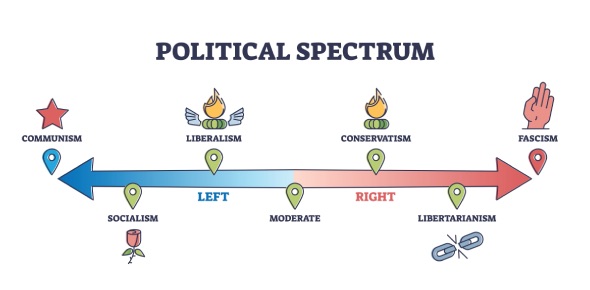
Conservatives: Power and Preservation of Hierarchy
While conservatives historically argued for small government, personal responsibility, and traditional values, the modern conservative movement in the U.S. has largely become about maintaining power structures that benefit a specific group—namely, the wealthy, corporations, and those who already hold social and political dominance.
- Big government for control, small government for social support – They claim to want less government, but only when it comes to regulations that benefit everyday people. They’ll deregulate corporations but push for strict laws on voting, reproductive rights, and education to maintain social hierarchies.
- Culture wars over policy – Modern conservatives focus more on stoking division—banning books, restricting discussions of race and gender, and promoting manufactured outrage—rather than offering solutions to economic or social issues.
- Authoritarian tendencies – Rather than respecting democratic outcomes, today’s conservatives increasingly push for voter suppression, gerrymandering, and questioning election results when they don’t win. Their goal isn’t just “preserving tradition”—it’s maintaining power by any means necessary.
Liberals: Slow Change Without Disrupting the System
Liberals, particularly those in the Democratic establishment, claim to want progress, but they often prioritize stability over real transformation. They believe in reforming systems rather than overhauling them, even when those systems are fundamentally flawed.
- Support for government intervention—but cautiously – Liberals believe the government should step in to help people through policies like healthcare reform, environmental regulations, and workers’ rights, but they tend to stop short of sweeping systemic change.
- Balancing corporate interests with public needs – They’ll push for raising the minimum wage but won’t challenge corporate power in a meaningful way. They talk about taxing the rich but rarely follow through in ways that fundamentally redistribute wealth.
- More talk than action – Liberals often co-opt progressive rhetoric (e.g., promising student debt relief or universal healthcare) but fail to deliver, prioritizing “bipartisanship” and incrementalism instead.
Progressives: Direct Challenge to Systems of Power
Progressives recognize that many of America’s core institutions—healthcare, policing, the economy—are structured to benefit the powerful at the expense of everyone else, and they advocate for bold changes to correct that imbalance.
- Structural change over surface reforms – Progressives push for universal healthcare, wealth taxes, workers’ rights, and other policies that directly challenge corporate and elite power.
- Equity over neutrality – While conservatives frame equality as “everyone playing by the same rules,” progressives argue that the rules themselves have been rigged in favor of the wealthy and powerful and need to be rewritten.
- Unapologetic action – Unlike liberals, progressives are less interested in compromise if it means sacrificing core values. They push for systemic overhauls, even if it disrupts political norms.
How This Plays Out in Practice
Take climate change as an example:
- Conservatives deny it, downplay it, or argue that businesses should be left alone to handle it (even when they don’t).
- Liberals acknowledge the crisis and propose regulations but hesitate to challenge the fossil fuel industry in a meaningful way.
- Progressives demand an end to corporate influence in climate policy and push for major structural reforms, like a Green New Deal.
Or take economic inequality:
- Conservatives argue that wealth inequality is natural and that taxing the rich hurts economic growth.
- Liberals call for modest tax increases and social programs but don’t fundamentally alter the system.
- Progressives push for wealth redistribution, stronger unions, and breaking up monopolies.
The Core Divide: Who Holds Power and Who Should?
At the end of the day, the real difference between these groups is their view on power:
- Conservatives want to maintain existing power structures, even at the cost of democracy.
- Liberals want progress but within the existing system, even when that system is fundamentally flawed.
- Progressives want to shift power away from corporations, the ultra-wealthy, and entrenched elites to create a more equitable society.
This isn’t just a theoretical debate—it’s a fight over who gets to shape the future.