Most local businesses aren’t bad at marketing. They’re just alone.
They post when they have time. They boost an ad here and there. They explain what they do and hope it sticks. None of that is wrong. It’s just structurally weak in today’s attention environment.
Modern attention doesn’t reward effort. It rewards familiarity.
And familiarity is almost impossible to build when you’re operating solo.
The problem most people don’t name is that marketing doesn’t work one post at a time. People don’t experience your content in isolation. They experience it as background noise. A single post disappears, not because it’s bad, but because it doesn’t repeat. It doesn’t echo. It doesn’t reinforce itself.
That’s not a creativity problem. It’s a math problem.
Joint marketing fixes the math.
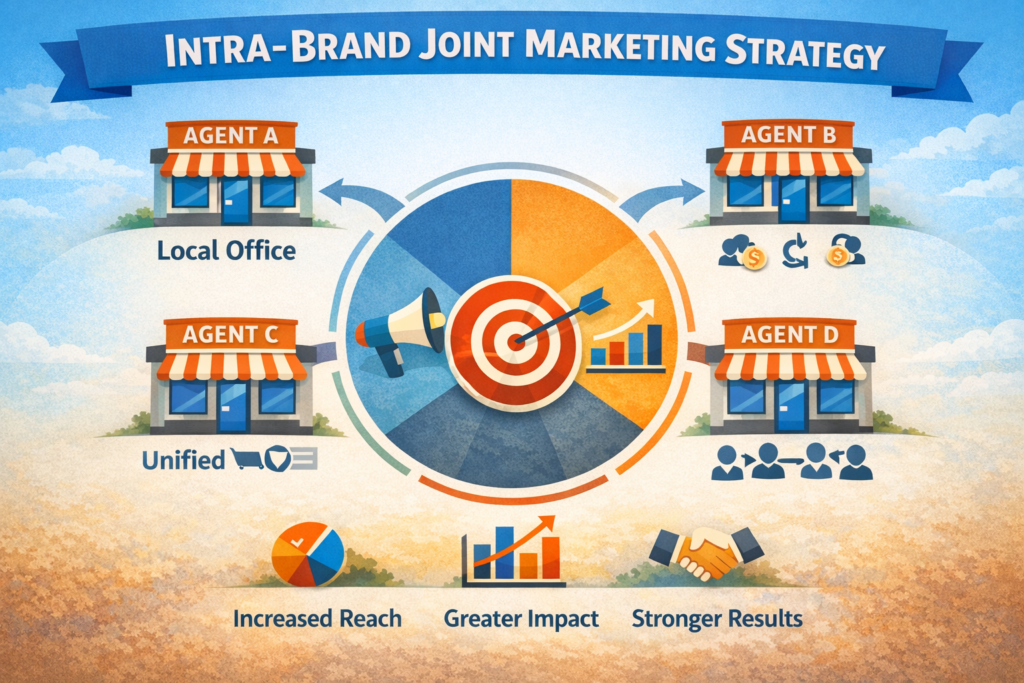
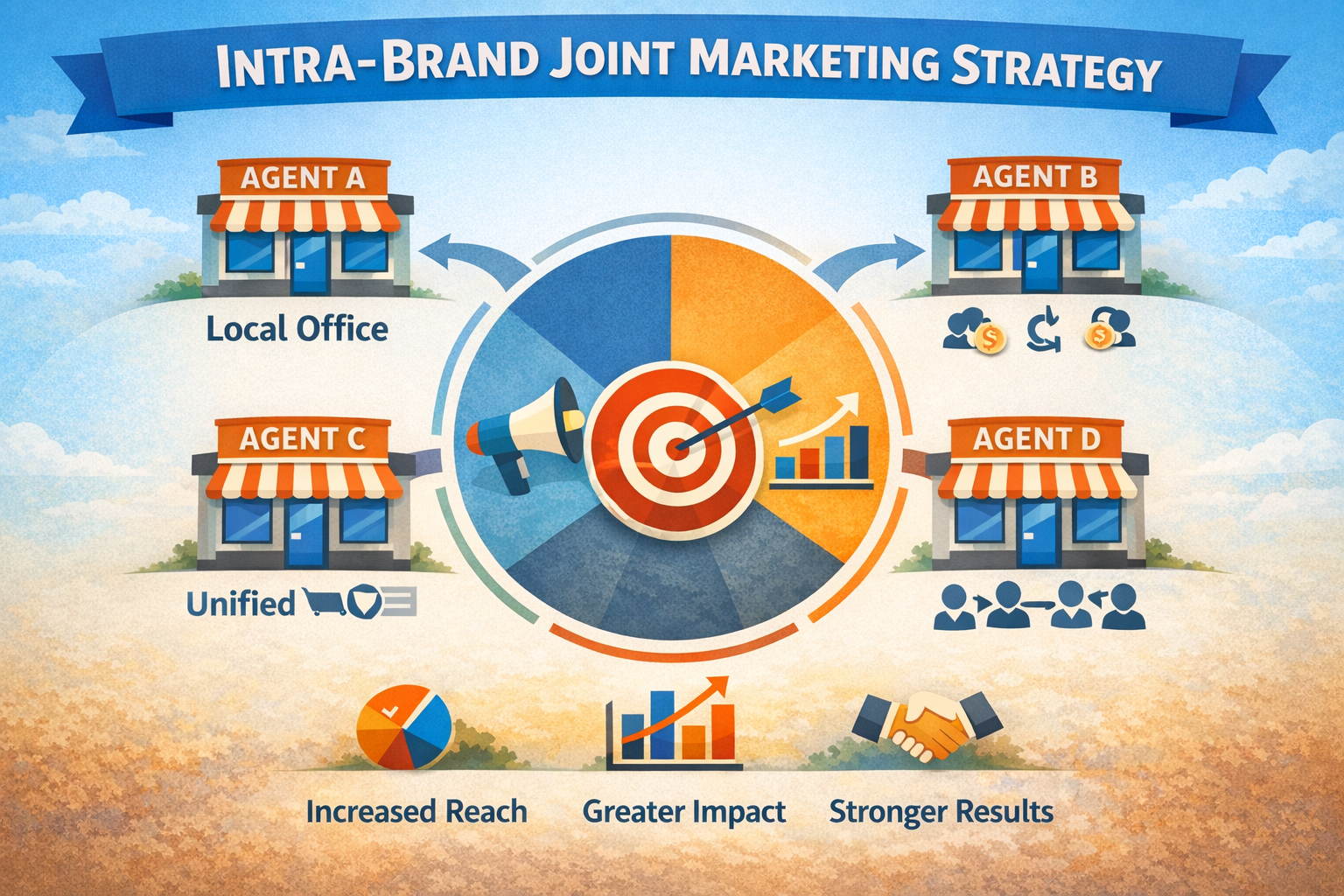
Joint marketing isn’t about merging businesses or sharing customers. It’s not co-branding or discount schemes. It’s multiple independent operators buying into one shared story and one shared production system.
One narrative. Multiple faces. Consistent presence.
Each business stays independent. The market just stops seeing them as isolated.
This works especially well when the content is educational.
People hate being sold to. They love being helped.
Educational content lowers defenses. It answers questions people already have. It reduces anxiety. It makes the viewer feel more capable than they did five minutes ago. That shift matters.
Instead of feeling like a business asking for attention, you become a familiar voice that shows up with clarity. That dynamic works across categories: professional services, healthcare, financial services, home services. Anywhere people feel confused, cautious, or overwhelmed.
The problem is that one business doing educational content still hits a ceiling. Limited reach. Limited frequency. Limited reinforcement.
Joint marketing removes that ceiling.
When multiple businesses participate in one coordinated system, the audience doesn’t think, “Wow, great collaboration.” They think, “I keep seeing this everywhere.”
That repetition is the point.
Trust doesn’t come from one good explanation. It comes from seeing helpful, consistent messages show up again and again, from different angles, in different contexts.
A simple example helps.
Take local insurance agents. Individually, each agent explains coverage, answers common questions, and tries to humanize a complicated product. Collectively, they’re fighting skepticism, bad press, and faceless technology promising cheaper options.
In a joint marketing model, those same agents participate in a shared educational content system. Different demographic perspectives. Different local offices featured. One consistent lens explaining how insurance actually works.
The result isn’t louder advertising. It’s familiarity.
People don’t feel like they’re choosing a stranger. They feel like they already understand the space and the people in it.
This model only works if boundaries stay clear. Pricing stays separate. Clients stay separate. Operations stay separate.
What’s shared is storytelling, production, and attention.
You’re not giving up independence. You’re buying leverage.
The real advantage of joint marketing isn’t reach. It’s perception.
When you show up consistently as part of a larger, coherent story, competitors aren’t competing with one business anymore. They’re competing with the feeling that your group is everywhere.
Most never catch up.
Joint marketing works because it aligns with how trust actually forms. Not in one interaction. Not from one ad. But through repeated, human, useful presence.
In crowded markets, the businesses that win aren’t the loudest or the cheapest.
They’re the ones that feel familiar before the decision ever gets made.