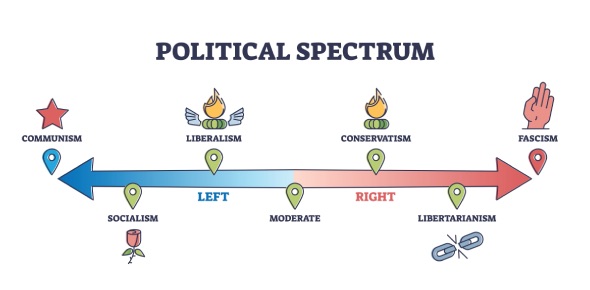
Politics is all about how people think society should be organized, how problems should be solved, and who should have power. Liberals, conservatives, and progressives all have different ideas about what’s best, and the main differences come down to how they view change, tradition, and the role of government.
Conservatives: Tradition and Stability
Conservatives generally believe that society works best when it sticks to tradition and maintains order. They value personal responsibility, free markets, and smaller government. Their thinking is often: “If something isn’t broken, don’t fix it,” and if changes are necessary, they should happen slowly.
- They tend to prefer lower taxes and fewer government programs, believing people and businesses should take care of themselves rather than relying on the government.
- They prioritize national security, law and order, and traditional social values.
- They believe in personal responsibility over collective solutions—if you work hard, you’ll succeed, and government shouldn’t interfere too much in people’s lives.
Liberals: Balance Between Change and Stability
Liberals believe the government should step in to help when people are struggling, but they also value personal freedoms and economic growth. They sit between conservatives and progressives—they want change but in a way that works with existing structures rather than completely replacing them.
- They support things like healthcare access, environmental protection, and workers’ rights but through gradual reforms rather than radical overhauls.
- They believe in regulating businesses to prevent corruption or harm to the public but still encourage a free-market economy.
- They prioritize individual rights, like freedom of speech and equal treatment, while also supporting some government programs to level the playing field.
Progressives: Urgent Change for Justice
Progressives share many values with liberals but believe in pushing for bigger, faster changes—especially when they see injustice or inequality. They argue that small tweaks aren’t enough when entire systems are unfair.
- They advocate for universal healthcare, a higher minimum wage, and more aggressive policies to address climate change and racial/economic inequality.
- They see wealth and power as too concentrated in the hands of a few and believe government should play a stronger role in redistributing resources to create fairness.
- They focus on social justice, challenging systemic issues like mass incarceration, discrimination, and corporate influence in politics.
How They Differ in Action
Imagine there’s a major economic crisis:
- Conservatives might say, “Let businesses recover on their own—government interference will make it worse.”
- Liberals might say, “Let’s create a government program to help people get back on their feet while keeping the economy stable.”
- Progressives might say, “The whole system is rigged—this is proof we need major reforms to make sure wealth is distributed fairly.”
These differences shape debates on everything from taxes to healthcare to civil rights. Conservatives prioritize stability and tradition, liberals try to balance progress with existing structures, and progressives push for rapid change to correct injustice. The tension between these views is what keeps political debates going—and what shapes the policies that affect all of us.